How to Learn Audition Lines Fast When the Tape Is Due Tomorrow
7/10/2026
Last-minute auditions are common. The goal is not to memorize perfectly in one heroic session. The goal is to understand the scene quickly enough that the lines can support the performance instead of stealing your attention.
Use a process that gets you on your feet early.
Read for story first
Before drilling lines, read the sides once for meaning:
- Who are you talking to?
- What do you want?
- What changed just before the scene?
- What changes during the scene?
- What are you hiding or protecting?
Memorization is easier when the lines are attached to action.
Break the scene into beats
Do not learn the whole scene as one long block. Divide it into turns:
- Opening tactic
- First pushback
- New information
- Emotional shift
- Final choice
Give each beat a simple label. Your brain remembers movement better than disconnected sentences.
Learn cues, not only your lines
Many actors lose time because they memorize their own words but not the cue into them. The cue tells you when to respond and why.
In Self-Tape Studio, upload the sides, choose your role, and let the AI reader handle the other lines. Run the scene focusing only on cues. Do not worry about the perfect take yet.
Use active recall
Cover the page and try the line. Check it. Try again. Reading the same sentence repeatedly feels productive, but active recall builds faster memory.
For difficult sections:
- Say the cue.
- Say your line without looking.
- Check the text.
- Repeat with the next cue.
- Run the beat from the top.
Keep the passes short and focused.
Add movement after the words start to stick
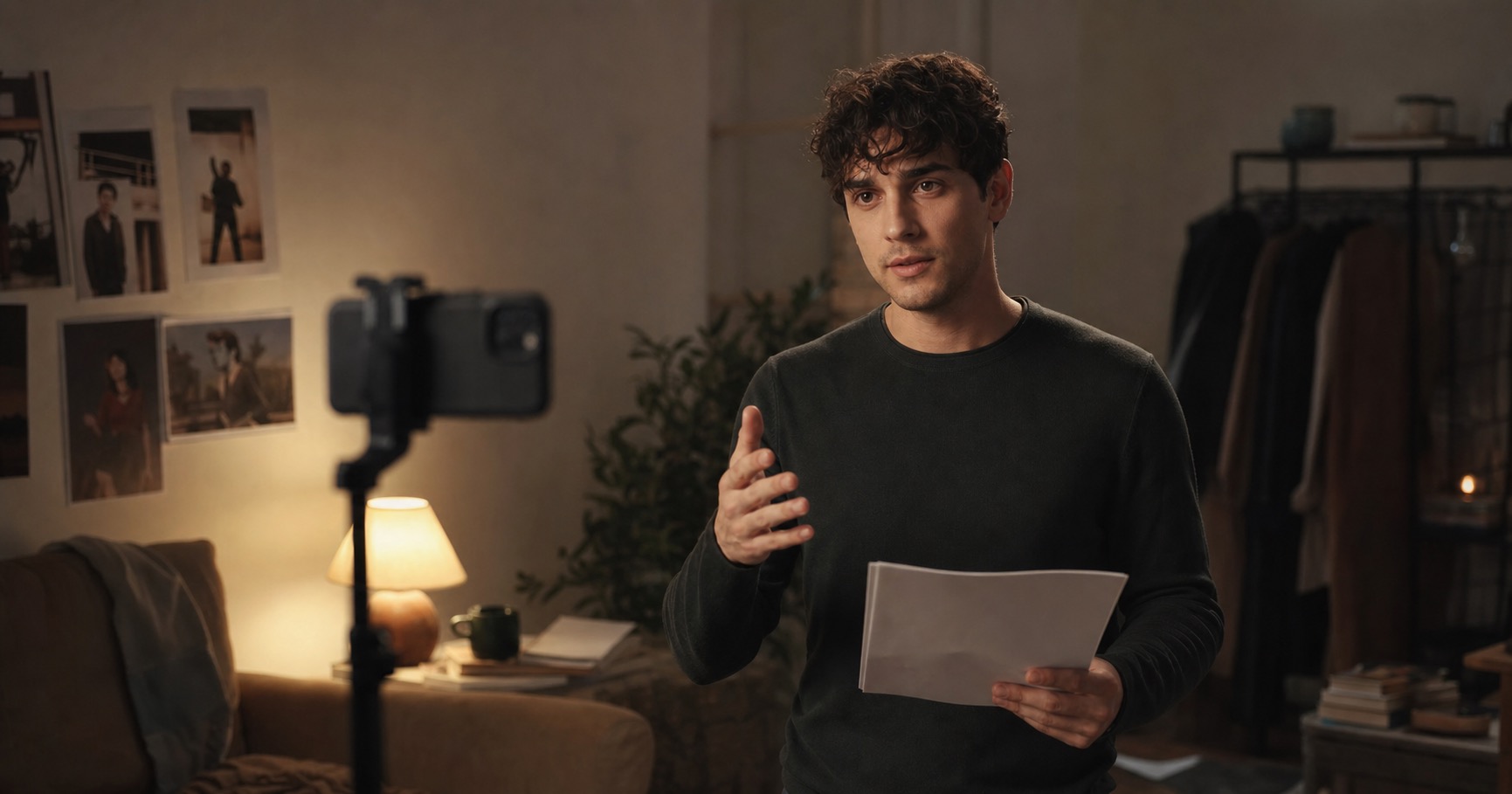
Once you know the basic structure, rehearse in your self-tape frame. Find the eyeline, sit or stand as you will record, and let the physical setup become part of the memory.
If you only learn lines while staring down at the page, the first taped take may feel like starting over.
Record a rough take early
Do not wait until you feel ready. Record a rough take once you understand the scene and know most of the lines.
The rough take shows what needs attention: a cue you keep missing, a thought that is unclear, a line that needs more breath, or a technical issue with sound.
Keep the final pass simple
When the deadline is close, avoid adding a dozen new ideas in the last hour. Choose the strongest clear version of the scene and tape it cleanly.
Self-Tape Studio helps because you can keep rehearsing with consistent cues whenever a human reader is unavailable. The less time you spend scheduling, the more time you spend acting.