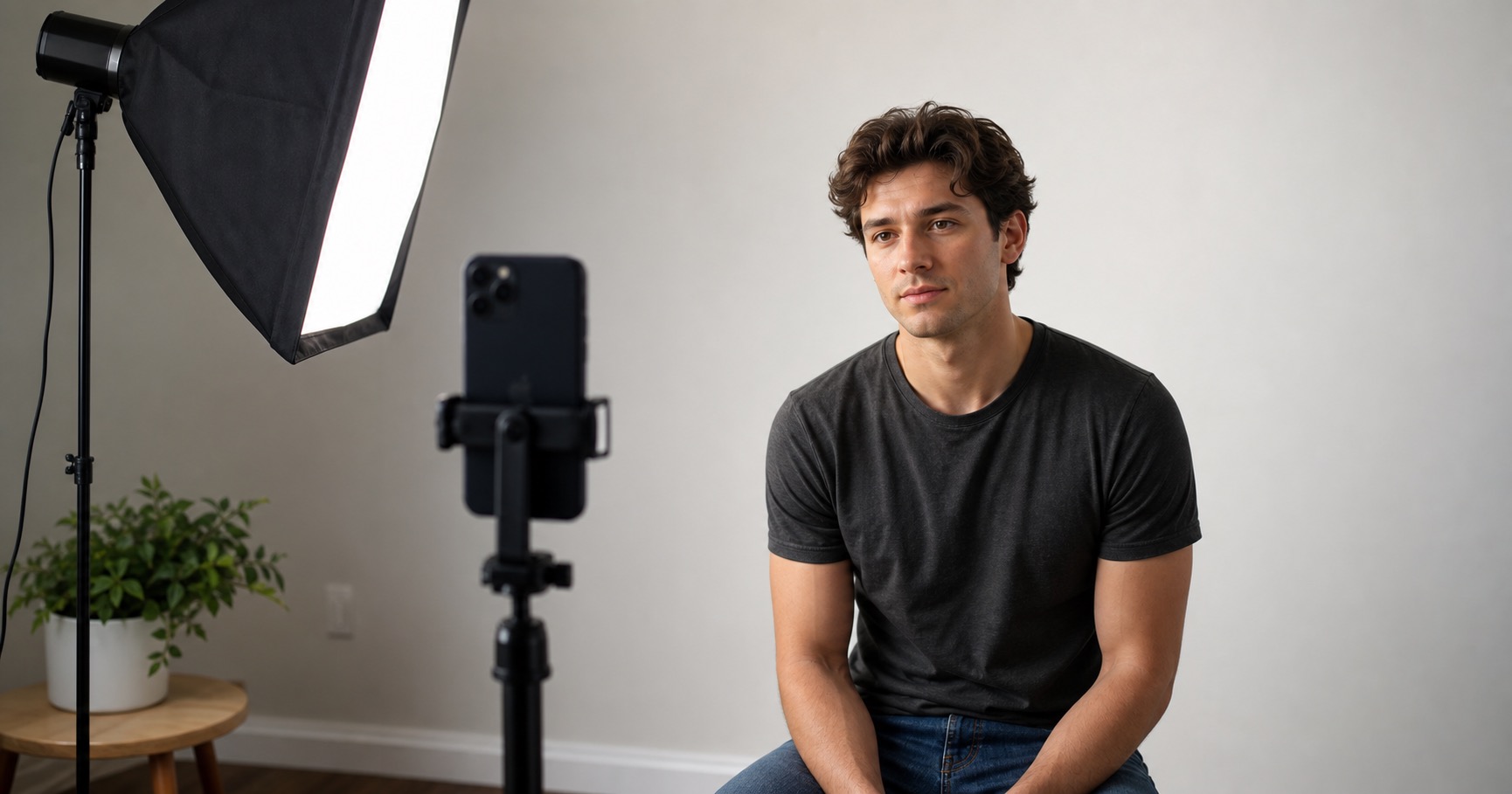
What Casting Directors Actually Need From Your Self-Tape Setup
6/2/2026
A self-tape setup does not need to look expensive. It needs to make the performance easy to evaluate.
Casting directors are looking at your choices, listening, presence, and fit for the role. The setup should support that, not compete with it.
Clear picture
Use a frame that shows your face and enough body language for the scene. Keep the camera stable. Avoid dramatic angles unless the instructions ask for something specific.
The viewer should not have to work to find your eyes.
Clean sound
Sound matters more than many actors realize. If your voice is hard to hear, the performance is harder to judge.
Check:
- Your voice is louder than the reader.
- The room is not echoing heavily.
- Notifications are off.
- The recording device is close enough.
- Playback confirms the file captured audio correctly.
In Self-Tape Studio, test the AI reader volume before recording final takes.
A reader who supports you
The reader does not need to act the scene for you. They need to give clear cues and leave room for your responses.
If you cannot schedule a person, use Self-Tape Studio to rehearse and record with AI reader cues. That keeps the audition moving without making the reader the center of the tape.
Follow the instructions
Instructions are part of the audition. If casting asks for a full-body slate, specific file name, accent choice, or one take only, follow it.
When instructions conflict with your usual setup, the instructions win.
Keep the background simple
A clean wall, simple room, or neutral backdrop is enough. Avoid anything that draws attention from the scene.
Do not spend more time decorating the frame than preparing the role.
Submit a watchable file
Before uploading, watch the tape from start to finish. Confirm that it opens, sounds clear, includes the required material, and is named correctly.
This final check catches preventable problems. It also gives you one last chance to choose the take that best serves the role.
Make the work easy to see
The setup is successful when casting stops noticing it. Your choices, listening, and relationship to the reader should carry the tape.
Use simple tools, remove friction, and protect your energy for the performance.